
In the food industry, visuals speak louder than words. For restaurants, food brands, and packaged goods, the way a product looks can make or break a customer’s decision to order, buy, or try something new. High-quality food photography is not just about aesthetics—it’s about creating an irresistible visual story that evokes taste, freshness, and quality.
For restaurants and food brands, investing in professional photography can elevate brand perception, increase online orders, and boost engagement across marketing channels. This article explores the essential techniques, best practices, and industry-specific tips for food product photography that drives sales and strengthens brand identity.
Why Food Photography Matters
Food is one of the most sensory-driven products, and in the digital world, visuals are the primary way customers experience it. Here’s why food product photography is essential:
- Stimulates Appetite: Vivid, high-quality images trigger hunger and cravings, encouraging orders and purchases.
- Communicates Quality: Fresh, well-prepared dishes photographed professionally signal high standards.
- Enhances Brand Identity: Consistent styling and imagery convey professionalism and establish a memorable brand presence.
- Drives Online Sales: Menus, e-commerce platforms, and social media rely heavily on visuals to convert browsers into buyers.
- Reduces Misunderstanding: Accurate representation of portions, ingredients, and presentation reduces customer disappointment.
Whether it’s a fine-dining menu, packaged snack, or beverage brand, compelling food images can significantly impact consumer behavior.
Key Techniques for Food Product Photography
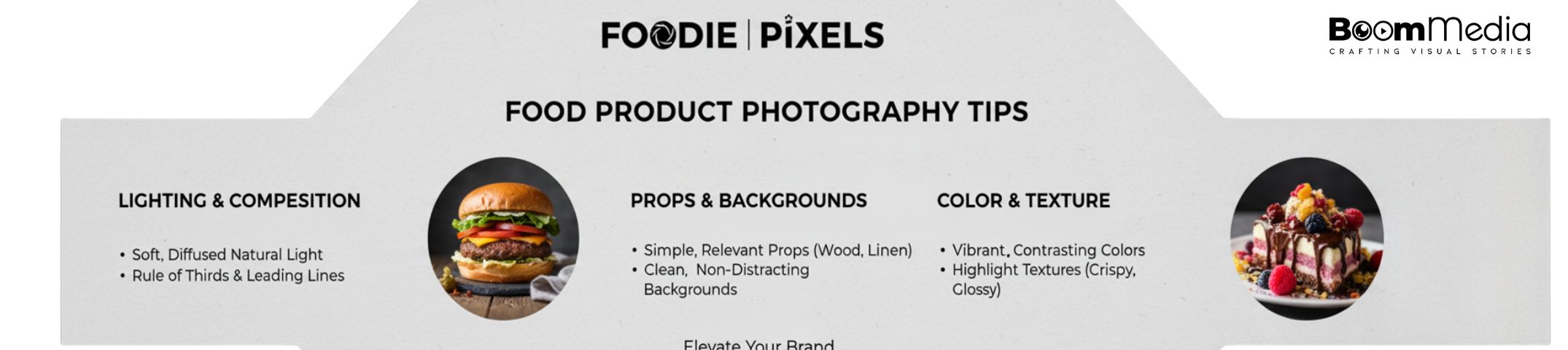
1. Focus on Freshness and Texture
The appeal of food lies in its freshness, texture, and visual details. Highlighting steam, gloss, or crispiness can make dishes irresistible.
Tips:
- Capture close-ups of textures like flaky pastries, juicy meats, or creamy sauces.
- Shoot immediately after preparation to preserve freshness.
- Use props sparingly to enhance rather than distract from the food.
2. Use Proper Lighting
Lighting is crucial in food photography. Natural light often produces the most appetizing results, but controlled studio lighting can enhance color, texture, and depth.
Tips:
- Use soft, diffused light to reduce harsh shadows.
- Avoid direct overhead light, which can flatten textures.
- Reflectors can be used to fill shadows and highlight key elements.
3. Composition and Styling
Food styling and composition guide the viewer’s eye and emphasize the most appetizing parts of a dish.
Techniques:
- Use the rule of thirds to create balanced compositions.
- Highlight main ingredients or focal points in the dish.
- Incorporate complementary props like cutlery, napkins, or garnishes to add context.
4. Shoot from Multiple Angles
Different foods require different angles to capture their appeal:
- Top-Down Shots: Ideal for flat dishes, pizzas, salads, and platters.
- 45-Degree Angle: Works well for stacked items, burgers, sandwiches, and layered desserts.
- Close-Ups: Showcase texture, toppings, or garnishes.
Providing multiple perspectives allows customers to fully appreciate the dish.
5. Include Lifestyle or Contextual Shots
While product-only images are essential for menus or online ordering platforms, lifestyle images create aspiration. Showing food being enjoyed in context—like a steaming cup of coffee on a café table—enhances storytelling and engagement.
Tips:
- Incorporate hands, utensils, or dining setups to add relatability.
- Use natural backgrounds for casual dining or clean, minimal props for premium items.
- Capture action shots like pouring sauce or sprinkling toppings for dynamism.
6. Accurate Color Representation
Food must look as good online as it does in real life. Color accuracy is crucial for conveying freshness and flavor.
Techniques:
- Use white balance settings to maintain true colors.
- Avoid color casts from artificial lighting.
- Adjust color subtly in post-processing to enhance appeal without misrepresentation.
7. Post-Processing and Retouching
Editing ensures the food looks clean, vibrant, and appealing. Post-processing allows for small adjustments without altering the reality of the product.
Common Edits:
- Brighten highlights and enhance shadows for depth
- Adjust saturation and contrast to make colors pop
- Remove minor imperfections like crumbs or smudges
Industry-Specific Considerations
Food product photography varies depending on the type of business:
- Restaurants: Focus on plated dishes, ambiance, and portion accuracy. Lifestyle shots with diners or staff can enhance relatability.
- Packaged Food Brands: Showcase packaging, branding, and the product itself. Include close-ups of textures to communicate quality.
- Beverages: Highlight colors, froth, condensation, or pouring action to emphasize freshness.
- Desserts & Pastries: Capture textures, layers, and toppings in both close-ups and lifestyle settings.
Understanding the target audience and platform requirements helps tailor photography for maximum impact.
Best Practices for Maximizing Sales
- Consistency: Maintain a uniform style across your menu or product catalog to reinforce brand identity.
- High Resolution: Enable zooming to show textures and details for online customers.
- Storytelling: Pair images with descriptive captions to evoke taste and experience.
- Social Media Optimization: Lifestyle and action shots perform well on Instagram, TikTok, and other platforms.
- Repurpose Images: Use product shots across menus, advertisements, email campaigns, and website banners.
High-quality food photography is a strategic marketing tool, turning appetizing visuals into orders and brand loyalty.
Conclusion
Food product photography is an essential investment for restaurants and food brands. It is not only about capturing a meal but about creating a visual experience that conveys freshness, flavor, and quality. By using proper lighting, focusing on textures, employing multiple angles, and incorporating lifestyle shots, businesses can showcase their products in the most appealing way. Consistent, high-quality images build brand credibility, drive online orders, and enhance customer engagement, ultimately increasing sales and fostering long-term brand loyalty.
In the food industry, compelling imagery is a recipe for success.
FAQs
Q1. Why is food photography important for restaurants and brands?
Ans. It attracts customers, conveys quality, and increases online orders by visually appealing to the senses.
Q2. What types of food photography are most effective?
Ans. Top-down, 45-degree, close-up, and lifestyle/contextual shots are all effective depending on the dish and platform.
Q3. How do I make food look fresh in photos?
Ans. Shoot immediately after preparation, use proper lighting, and emphasize textures and vibrant colors.
Q4. Can natural light be used for food photography?
Ans. Yes, natural light is ideal for its soft, diffused quality, but controlled studio lighting can also achieve consistent results.
Q5. How many images should I include for each menu item?
Ans. At least 3–5 images, including product-only, close-ups, and lifestyle shots, provide a comprehensive view.
Q6. Should I use props in food photography?
Ans. Yes, props like cutlery, napkins, or garnishes can enhance context, but they should not distract from the food.
Q7. How important is color accuracy in food photography?
Ans. Extremely important; accurate colors convey freshness, quality, and flavor, helping reduce customer dissatisfaction.
Q8. Can food photography improve social media engagement?
Ans. Absolutely. High-quality, visually appealing food images are more likely to be shared and drive customer interaction.
Q9. Is post-processing necessary for food images?
Ans. Yes, post-processing enhances brightness, contrast, and color while removing minor imperfections to make the food look appetizing.
Q10. How can I use food photography to increase sales?
Ans. Consistently showcase quality, textures, and portion sizes across online menus, advertisements, and social media to entice customers and encourage orders.