
For businesses selling online, product images can influence how a brand is perceived long before a customer reads the product description. Good visuals help products look appealing, trustworthy, and worth exploring. That is why many business owners compare professional vs DIY product photography when deciding how to present their products.
At first glance, smartphone photography may seem enough. Modern phones have advanced cameras, editing features, and user-friendly tools that make product photos easier to capture than ever before. At the same time, professional product photography offers a higher level of control, consistency, and polish that can make a noticeable difference in how products perform online.
Understanding the difference between the two helps businesses choose the right approach for their stage, budget, and goals.
What Is DIY Smartphone Product Photography?
DIY smartphone product photography refers to taking product images using a smartphone instead of professional camera equipment or studio services. This approach is popular among small businesses, startups, home-based sellers, and new eCommerce brands because it is affordable and accessible.
With a smartphone, basic lighting, a clean backdrop, and simple editing apps, it is possible to create decent product images for websites, social media, and marketplace listings. For many businesses, this can be a practical starting point.
The main appeal of DIY photography is convenience. A business owner can take photos quickly, make updates as needed, and avoid the upfront cost of hiring a professional photographer.
What Is Professional Product Photography?
Professional product photography involves using advanced equipment, controlled lighting, styling, composition, and editing techniques to create polished, high-quality product images. These photos are designed not just to show the product, but to present it in a way that supports branding, trust, and sales.
Professional photographers often use studio cameras, tripods, diffused lighting, reflective tools, specialized backgrounds, and detailed editing software. More importantly, they understand how to photograph different materials, shapes, and surfaces in ways that make products look their best without being misleading.
When comparing professional vs DIY product photography, the biggest difference is not only the camera. It is the level of expertise and consistency behind the final result.
Image Quality and Detail
One of the clearest differences between smartphone photography and professional product photography is image quality.
Smartphones can produce sharp and attractive photos in good lighting, especially for social media or basic online use. They work well for simple products and quick content creation. However, they may struggle with fine detail, depth, glare, shadows, and color accuracy in more demanding situations.
Professional photography usually delivers higher-resolution images with better control over focus, texture, and detail. This is especially important for products where material quality, finish, stitching, packaging, or small design elements matter.
If a product has reflective surfaces, transparent packaging, metallic parts, or intricate craftsmanship, professional photography often handles those challenges much better than a smartphone setup.
Lighting Control
Lighting can completely change how a product looks. Even a high-quality item can appear dull or unappealing if the lighting is poor.
With DIY smartphone photography, lighting often depends on natural daylight, ring lights, or affordable home setups. These can work well, but they may not always provide consistent results. Shadows, uneven brightness, and unwanted reflections are common issues.
Professional photographers use controlled lighting setups that are designed to highlight the product accurately and attractively. They can adjust brightness, soften shadows, manage reflections, and maintain a consistent style across multiple products.
In the debate around professional vs DIY product photography, lighting is one of the most important separating factors because it directly affects how premium and trustworthy a product appears.
Consistency Across Product Listings
Consistency matters in eCommerce. When all product photos have the same background, angle style, lighting quality, and editing approach, the brand looks more organized and professional.
DIY smartphone photography can sometimes result in inconsistency, especially if photos are taken on different days, in different lighting conditions, or with varying backgrounds. While this may not seem like a major issue at first, it can make an online store look less polished overall.
Professional product photography usually follows a clear visual standard. This creates a more cohesive shopping experience and helps strengthen brand identity.
For businesses with growing catalogs or multiple product categories, this consistency can become a major advantage.
Cost and Accessibility
One reason many businesses start with smartphone photography is cost. It is the more budget-friendly option, especially for new sellers. A phone, some natural light, and a simple backdrop may be enough to get started without a major investment.
Professional photography, on the other hand, involves a higher upfront cost. Businesses may need to pay for the photographer’s time, editing, styling, studio setup, or per-image rates. For some brands, that cost can feel significant in the beginning.
However, the value should also be considered. Professional images can often be used across websites, ads, email campaigns, catalogs, and social media for a long time. In that sense, they are not just an expense but a reusable business asset.
Speed and Flexibility
Smartphone photography offers flexibility. Business owners can quickly photograph new inventory, test ideas, or create casual behind-the-scenes content without waiting for a professional shoot. This is useful for fast-moving product launches, social media updates, and small catalog changes.
Professional photography is less immediate, but the outcome is usually more refined. It works particularly well when businesses need hero images, ad creatives, product page visuals, or launch-ready assets that represent the brand at a higher level.
This is why professional vs DIY product photography is not always a matter of choosing only one. Some businesses use both depending on the purpose.
Which Option Is Better for Online Businesses?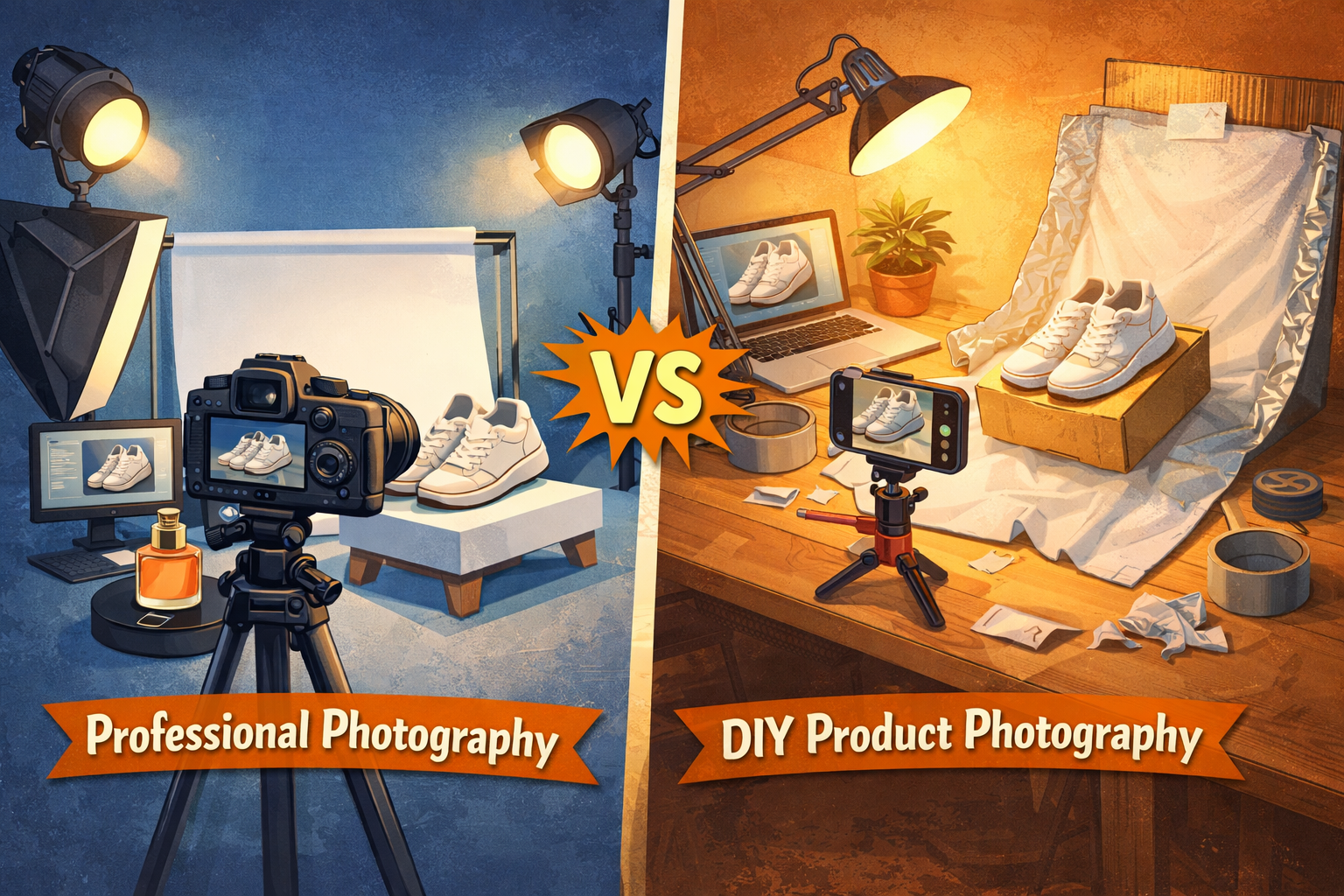
The best choice depends on the product, brand image, and business goals.
DIY smartphone photography may be enough for small businesses that are just starting out, testing products, or posting regularly on social media. It is practical, affordable, and easier to manage in-house.
Professional product photography is often the better choice when image quality, consistency, branding, and conversion performance matter more. It is especially useful for established eCommerce stores, premium products, competitive marketplaces, and businesses that want a stronger visual identity.
The real question in professional vs DIY product photography is not which one is universally better, but which one fits the business’s current needs.
Conclusion
When comparing smartphone photography and professional product photography, the difference comes down to more than equipment. It involves image quality, lighting control, consistency, branding, and how a product is ultimately perceived by customers.
DIY smartphone photography can be a smart and cost-effective way to get started, especially for smaller businesses. Professional product photography offers a higher level of polish and precision that can help products stand out and build trust online.
For online businesses, strong visuals are not optional. Whether using a smartphone, a professional photographer, or a mix of both, the goal remains the same: create product images that help customers feel informed, confident, and ready to buy.
FAQs
Q1. What is the difference between professional and DIY product photography?
Ans. Professional product photography uses advanced equipment, lighting, and editing expertise, while DIY product photography is usually done with simpler tools like a smartphone and basic setup.
Q2. Can smartphone product photography be good enough for online stores?
Ans. Yes, smartphone photography can work well for some small businesses, especially when lighting and composition are handled carefully.
Q3. Why is professional product photography better for some products?
Ans. It is better for products that require detailed close-ups, accurate colors, consistent lighting, and a more polished brand presentation.
Q4. Is DIY product photography more affordable?
Ans. Yes, DIY photography is usually more budget-friendly because it avoids the cost of hiring a professional photographer.
Q5. Does professional product photography help increase sales?
Ans. It can, because stronger visuals often build trust and make products more appealing to online shoppers.
Q6. What kind of products benefit most from professional photography?
Ans. Premium products, fashion items, jewelry, cosmetics, electronics, and products with detailed craftsmanship often benefit the most.
Q7. Can a business use both professional and smartphone photography?
Ans. Yes, many businesses use professional photos for product pages and ads, while using smartphone photography for social media and quick updates.
Q8. Is lighting more important than the camera itself?
Ans. In many cases, yes. Good lighting can make a major difference in how a product looks, even when using a smartphone.
Q9. Does DIY photography affect brand image?
Ans. It can. If the images are inconsistent or low quality, it may make the brand appear less professional.
Q10. When should a business switch from DIY to professional product photography?
Ans. A business should consider switching when it wants stronger branding, better consistency, improved product presentation, or higher-quality visuals for marketing and sales.